
How to Plan a Low-Maintenance Outdoor Space for Modern Bangalore Homes
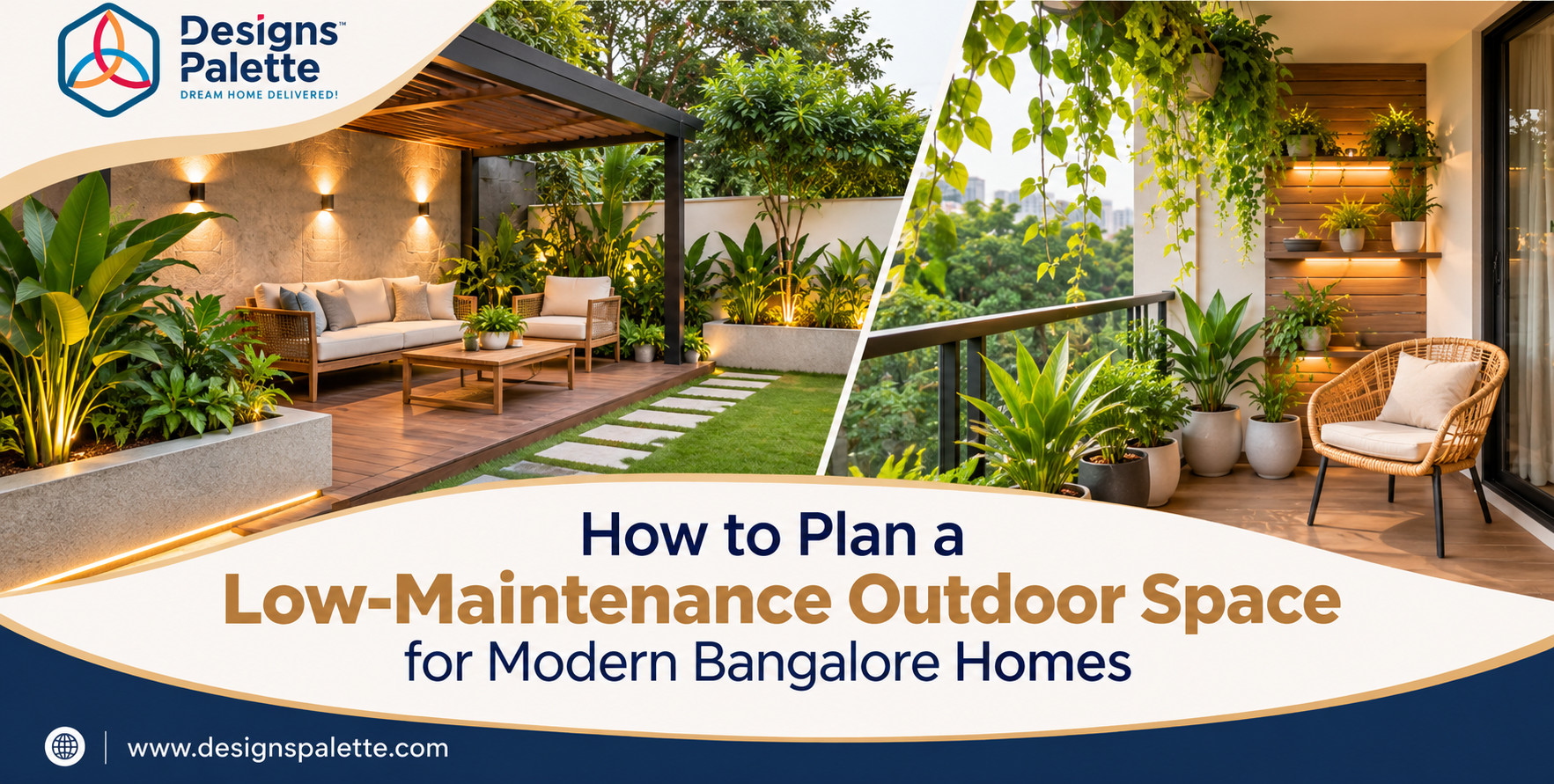
Table of Contents
“Walls speak the language of culture, craft, and personal style.”
A beautiful garden is something most homeowners appreciate. A little greenery near the entrance, a comfortable outdoor seating area or a terrace filled with plants can make a home feel more welcoming. But there’s one question people often forget to ask before planning these spaces: how much effort will it take to maintain them?
A garden that looks stunning immediately after installation may become difficult to manage a few months later. Plants may outgrow their allocated spaces, outdoor flooring may become slippery, and watering can turn into a daily responsibility.
This is why outdoor planning should consider everyday maintenance just as much as appearance.
For homeowners in Bangalore, where independent houses, villas and compact residential properties have different outdoor requirements, a practical landscape design can make a noticeable difference.
Let’s explore how to create an outdoor space that looks beautiful without demanding too much attention.
1. Begin With the Space You Actually Have
Before choosing plants, outdoor furniture or decorative features, understand the available area.
A small front yard, a long side passage, a terrace and a spacious villa garden all require different approaches. Trying to recreate a large garden design in a compact space often results in unnecessary clutter.
Start by identifying the usable area and dividing it according to purpose. You might create a small section near the entrance for greenery, a dedicated seating corner for relaxation, a pathway connecting the entrance and garden, a planting area along the compound wall, or an open section for family activities.
This simple exercise helps prevent overcrowding. The goal is to make every part of the space useful rather than filling it with decorative elements.
Outdoor area planning
Outdoor area | Practical design approach | Maintenance consideration |
Small front yard | Compact planting beds | Easy trimming and cleaning |
Side passage | Narrow planters and pathways | Avoid obstructing movement |
Terrace | Container gardening | Waterproofing and drainage |
Villa garden | Lawn, planting and seating zones | Irrigation and pruning |
Entrance area | Decorative plants and lighting | Regular cleaning |
2. Select Plants Based on Sunlight and Maintenance
Plant selection is where many outdoor projects become difficult to maintain.
A plant may look attractive in a nursery, but that doesn’t mean it will grow well in your garden. Sunlight, shade, soil conditions, water availability and the amount of attention required all matter.
Observe the outdoor area at different times of the day before selecting plants. Some areas may receive direct sunlight for several hours, while others remain shaded by walls or neighbouring buildings.
A few options worth discussing with a landscape professional include snake plants for decorative corners, areca palms for suitable garden boundaries, bougainvillea for sunny areas, hibiscus for flowering sections, ferns for shaded corners and ZZ plants for covered areas.
These are examples rather than a universal planting plan. The final selection should suit the specific microclimate and site conditions. A well-planned combination of plants is usually easier to maintain than a garden containing many unrelated varieties.
Material comparison
Material | Where it can be used | Important consideration |
Natural stone | Pathways and patios | Surface texture and sealing |
Outdoor tiles | Seating and paved areas | Slip resistance |
Gravel | Decorative garden sections | Weed control and edging |
Treated wood | Decking and seating | Weather protection |
Concrete pavers | Walkways | Joint stability and drainage |
3. Reduce the Lawn Area Where Possible
A large green lawn can look beautiful, but it also requires regular attention. Mowing, watering, trimming and dealing with weeds can become time-consuming, particularly when the garden is larger.
If your household doesn’t need a large lawn for children or outdoor activities, consider reducing its size. You can introduce natural stone pathways, gravel sections, decorative pebble beds, ground-cover plants, paved seating areas and raised planting beds.
These elements can create visual interest while reducing the amount of lawn that requires regular maintenance. However, drainage and surface heat should be considered when choosing paving and gravel materials.
4. Use Hardscape Materials That Are Practical Outdoors
Outdoor materials experience conditions that indoor materials don’t. Rain, dust, direct sunlight and changing temperatures can affect their appearance and durability.
That’s why choosing materials based only on their appearance can create problems later. Polished surfaces may look attractive but can become slippery when wet. Certain wooden finishes may require frequent treatment, while unsuitable stones may stain easily.
Before selecting materials, consider where they will be used, their surface texture, weather resistance, cleaning requirements and how they fit the overall architectural style. Natural stone can work well for pathways and patios, outdoor-rated tiles for seating areas, gravel for decorative sections, treated wood for selected decking applications and concrete pavers for walkways.
A material should complement the building while remaining suitable for outdoor conditions.
Outdoor lighting
Lighting type | Recommended placement |
Pathway lighting | Walking routes |
Accent lighting | Trees and feature plants |
Wall lighting | Outdoor seating |
Step lighting | Changes in floor level |
Ambient lighting | Patios and garden corners |
5. Make Watering Easier With Proper Irrigation Planning
Watering is one of the most regular garden maintenance activities. If plants are spread across different corners without a proper layout, watering can become inconvenient.
An irrigation system can simplify this process. Drip irrigation, for example, delivers water closer to plant roots and can be useful for planting beds and selected container arrangements.
When planning irrigation, consider plant water requirements, the water source location, pipe routing, drainage arrangements, timer controls where suitable, and accessibility for repairs.
Not every garden needs an automated irrigation system. The right solution depends on its size, plant selection and available budget. The important thing is to plan water access before completing the outdoor flooring and planting work.
6. Design Lighting for Both Appearance and Practical Use
Outdoor lighting can make a garden feel completely different in the evening. A few carefully positioned lights can highlight plants, illuminate pathways and make a seating corner more comfortable.
Instead of installing lights everywhere, divide the garden according to its activities. Pathway lights can illuminate walking routes, accent lights can highlight trees and feature plants, wall lights can serve outdoor seating, step lights can improve visibility around level changes, and ambient lighting can make patios more inviting.
Always select outdoor-rated fixtures and coordinate electrical points before installation.
7. Plan for Maintenance Before the Garden Is Installed
One of the best ways to create a practical garden is to be honest about the time you can spend maintaining it.
If your schedule is busy, choose a simpler planting arrangement. If you enjoy gardening, you may prefer a dedicated area with more plant varieties.
Also consider the mature size of plants. A small sapling may eventually grow into a large tree, so spacing should be planned accordingly. Think about access for pruning, cleaning, replacing plants and repairing irrigation systems.
These small decisions make a difference over time.
8. Why Professional Landscape Planning Matters
A successful landscape project is not simply about arranging attractive plants. It involves understanding the site, selecting suitable materials, planning drainage, coordinating lighting and creating outdoor areas that work with the building.
Designs Palette approaches landscape design through planting, hardscape features, outdoor living requirements and site-specific considerations. Its integrated design and execution services also help coordinate the landscape with the property’s overall architectural appearance.
This is particularly useful when landscaping is being planned alongside new construction or renovation.
Final Thoughts
A good outdoor space should make your home more enjoyable, not give you another responsibility to manage every day.
Whether you’re working with a small entrance garden, a terrace or a large villa landscape, focus on practical layouts, suitable plants, durable materials and manageable maintenance.
The most successful outdoor spaces are not necessarily the most elaborate ones. They are the ones that continue to work beautifully long after installation.
Planning an outdoor upgrade for your property? Connect with Designs Palette to discuss a landscape design that suits your space and lifestyle.