
Turnkey Interior Design vs Managed Renovation: Which Approach Suits Your Project?
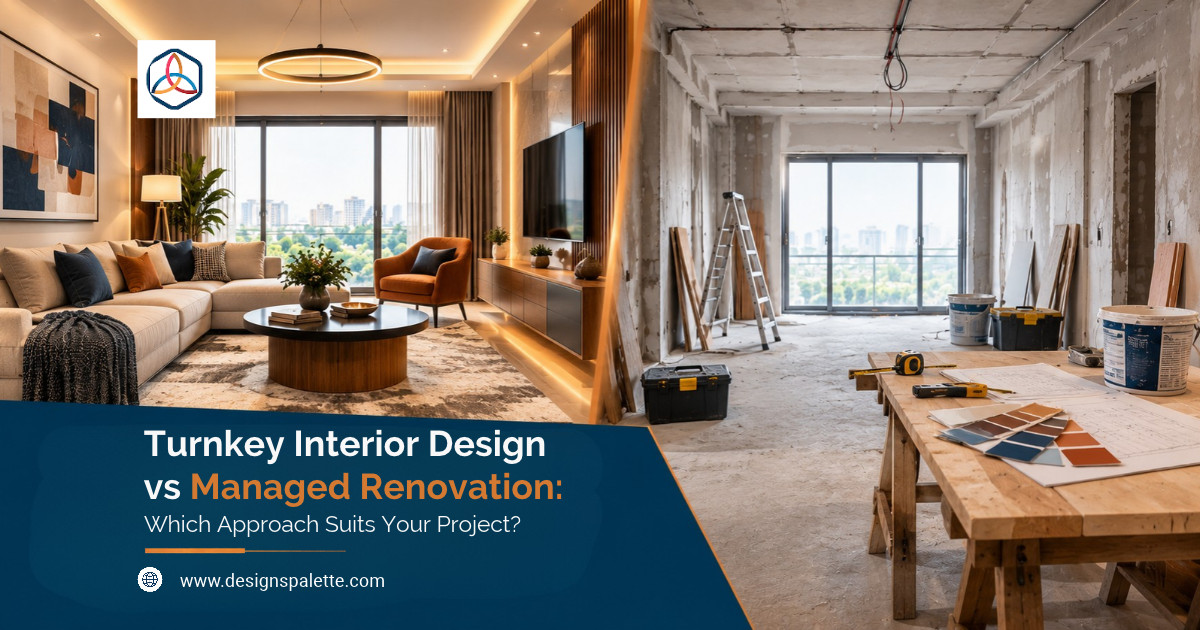
Table of Contents
“Walls speak the language of culture, craft, and personal style.”
Choosing how to deliver your interior project is one of the most consequential decisions you will make before a single wall is touched. Partnering with Designs Palette, the difference between turnkey design and managed renovation affects your budget control, your time investment, your stress levels, and ultimately the finish you walk into on completion day.
Understanding the Two Approaches
What Is Turnkey Interior Design?
What Is a Managed Renovation?
When working with Designs Palette, this approach gives you granular control over every decision and can allow more flexibility to swap suppliers or adjust scope as the project evolves, while managing separate contracts and coordinating between parties at key stages.
Turnkey Interior Design vs Traditional Renovation: A Direct Comparison
Factor | Turnkey Interior Design | Managed Renovation |
Client time required | Low one point of contact | High multiple relationships to manage |
Cost transparency | Consolidated fee structure | Itemised but spread across vendors |
Design consistency | High one team owns the vision | Variable depends on coordination |
Flexibility mid-project | Moderate changes affect the whole package | High easier to adjust individual elements |
Accountability | Single provider responsible | Shared can create gaps in responsibility |
Suitable for | Busy clients, complex projects, premium outcomes | Hands-on clients, phased budgets, simpler scopes |
Pros and Cons of Turnkey Interior Design
The Advantages
- Single point of accountability. One contract, one team, and one party responsible if something goes wrong. This removes the common problem of trades blaming each other for delays or defects.
- Cohesive design outcome. Because the same team controls every element of architecture, finishes, furniture, lighting, and accessories the result is integrated rather than assembled from parts.
- Reduced client burden. For professionals or families with limited bandwidth, not having to schedule and chase multiple contractors is a significant practical benefit.
- Trade access and procurement efficiency. Established turnkey providers typically have longstanding supplier relationships, which can translate to better lead times and access to products not available at retail.
- Predictable programme. With one team managing the schedule, phasing and sequencing are coordinated internally rather than negotiated between separate parties.
The Limitations
- Higher upfront cost. The management premium and consolidated fee mean the initial quote will generally be higher than engaging trades separately.
- Less granular control. Clients who want to make individual supplier decisions or shop around for specific items may find the turnkey model constraining.
- Provider dependency. The quality of the entire project rests on the capability of one firm. Choosing the wrong provider carries more concentrated risk.
How to Choose an Interior Design Approach for Your Project
There is no universally correct answer. The right model depends on a combination of your personal circumstances, project complexity, and priorities. Work through the following considerations before committing to a delivery method with Designs Palette.
Consider Your Available Time
Consider Your Project Complexity
Consider Your Budget Structure
Consider Your Risk Tolerance
Making Your Decision
The pros and cons of turnkey interior design ultimately point toward the same conclusion: this model works best when you prioritise outcome quality, time efficiency, and consolidated accountability over granular control and maximum budget flexibility. A managed renovation suits clients who are prepared to invest personal time, have experience navigating contractor relationships, or are working in phases.
Whichever path you choose, clarity at the outset about scope, budget, programme, and decision-making authority is what separates a smooth project from a difficult one. If you are weighing up these approaches for an upcoming project, the best next step is a detailed conversation with the team at Designs Palette, who can assess your specific brief and advise accordingly.